Today's Daily Double is... what the ai say about how i can make the boat rock less during northerly winds!
Houseboat Stabilization Plan: The "No-Rock" Dock Strategy
Problem
A 40 ft Gibson houseboat (shallow draft, high windage) is experiencing significant rolling, rocking, and banging against the dock during northerly winds.
Goal
Minimize movement and noise to allow for comfortable sleep, prioritizing low-cost adjustments before higher-cost gear upgrades.
Phase 1: The Geometry Fix (Cost: $0 using existing rope)
The most common cause of excessive movement is the boat building up momentum due to slack in the lines. Standard bow and stern lines tied straight to the dock prevent drifting away but allow the boat to surge back and forth along the dock. This surging motion often amplifies rolling.
The Solution: Spring Lines
Add spring lines in an “X” pattern between the boat and dock. This locks the boat in place so it cannot surge forward or backward. The bow and stern lines can then be left slightly slack; their main job becomes just keeping the boat from drifting outward, not controlling surge.
How to Rig Spring Lines:
- Aft Spring: Tie a line from a bow cleat (or midship cleat) on the boat and run it aft (toward the back) to a dock cleat near the stern of the boat.
- Forward Spring: Tie a line from a stern cleat (or midship cleat) on the boat and run it forward to a dock cleat near the bow of the boat.
Tighten the spring lines good and snug. You can then keep the bow and stern lines a bit looser – just enough to keep the boat parallel to the dock without significant slack.
Diagram: Spring Line Setup
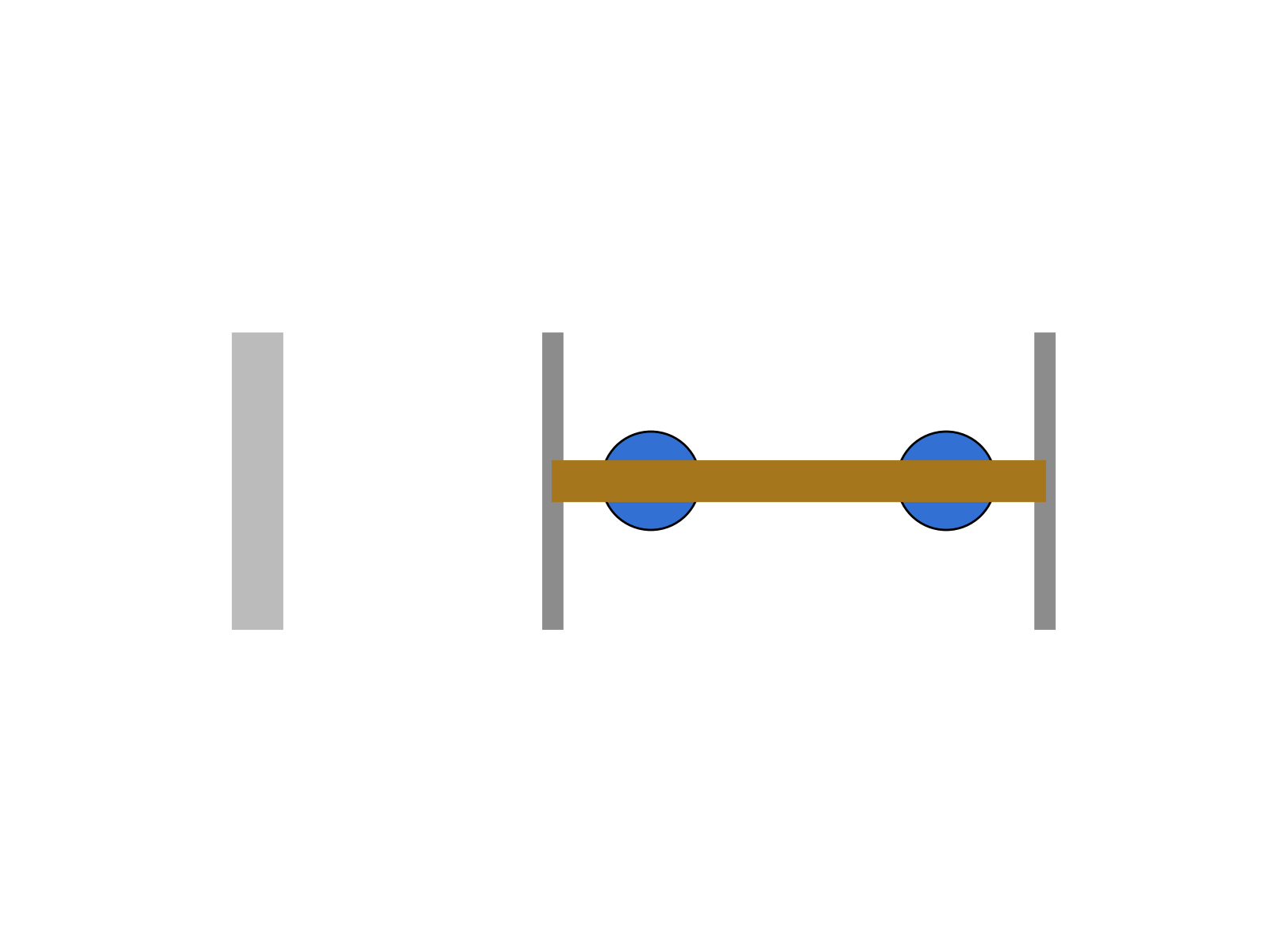
Note: Always tighten the spring lines first to restrict motion. The bow and stern lines should be a bit slack after the springs are set, so they don’t fight the springs – they only prevent the boat from moving away from the dock.
Phase 2: The "Silencer" Upgrades (Cost: Low / ~$50–$100)
If banging against the dock is the main sleep-killer, it means the fenders are compressing too much or rolling out, allowing the hull to hit the dock, or the lines are snapping tight suddenly. Two key upgrades can help:
1. The Fender Board (Crucial to Stop Banging)
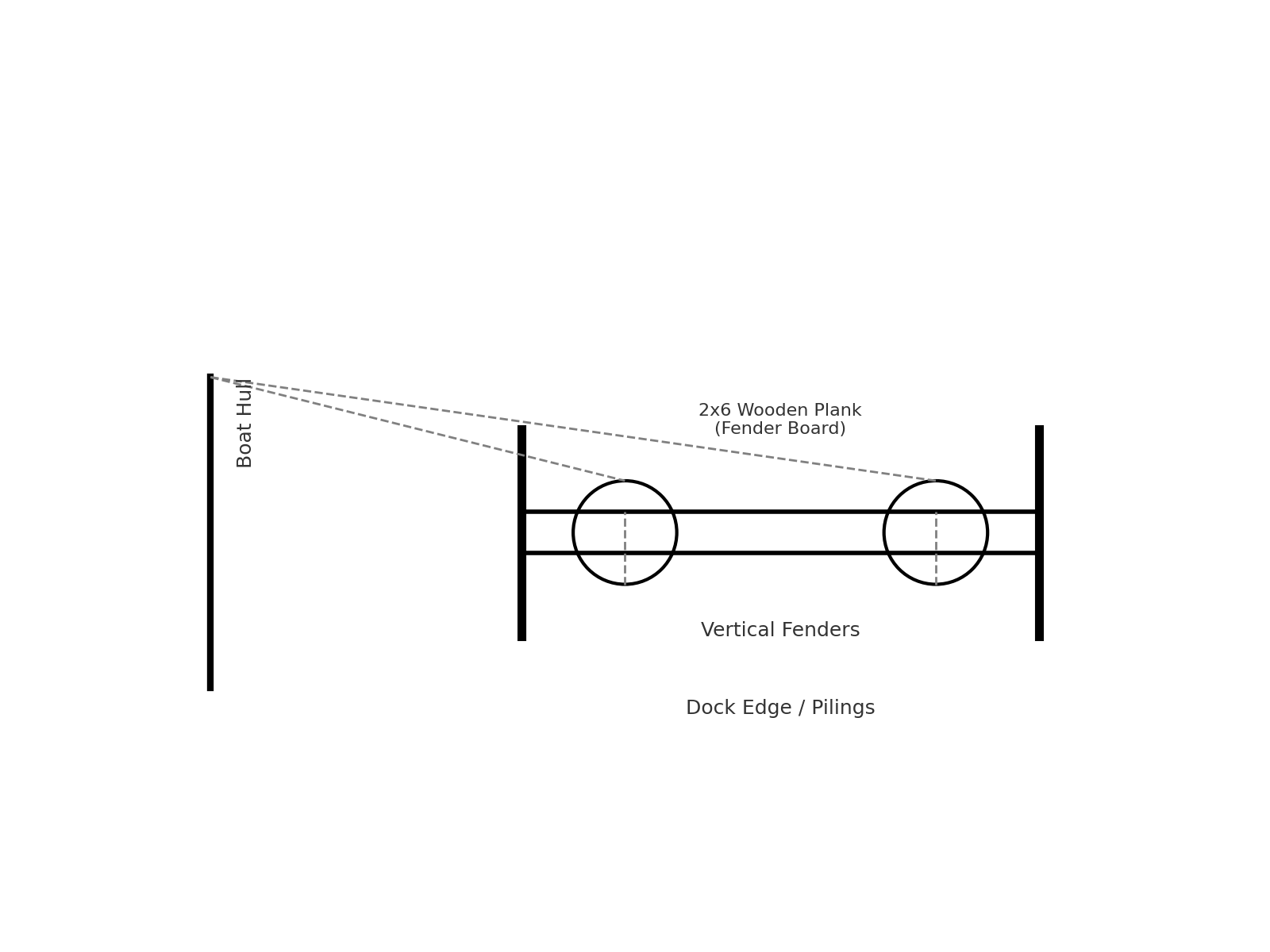
Standard round fenders can roll out of position or get squished into the gaps between dock pilings or boards. A fender board acts as a buffer to protect the boat by distributing the contact along the dock.
- What to use: A single 2×6 or 2×8 board (about 6–8 feet long, pressure-treated) as the fender board.
- How to rig it: Hang two of your existing cylindrical fenders vertically from the boat’s side, spaced to span a couple of dock pilings. Then hang the board horizontally outside of those two fenders (between the fenders and the dock). You can run lines through holes in the board’s ends or simply tie the board to the fenders.
- Why it works: The flat board will ride against the dock or pilings, while the fenders sit between the board and your hull. The board keeps the fenders from popping out of place and spreads the load against the dock. So when the boat rocks or presses in, the board smoothly slides and takes the abrasion, and the hull doesn’t directly bang the dock.
Diagram: Fender Board Setup
      |           BOAT HULL             |
      |_________________________________|
               |               |
             (   )           (   )      <-- Vertical Fenders
               |               |
      |=================================| <-- 2x6 Wooden Plank
      |=================================|     (The Fender Board)
               |               |
      ___________________________________ <-- Dock Edge / Pilings
2. Line Snubbers
- What to buy: A few rubber mooring snubbers (black rubber coils or heavy-duty bungee snubbers) sized for your dock lines.
- How to use: Feed your dock lines through the rubber snubbers and secure them back on themselves (as per the product instructions). Place the snubbers on the lines that tend to snap tight (usually the bow and stern lines, or whichever lines get jerky).
- Why it works: The rubber snubbers add elasticity to the lines. Instead of the boat yanking to the end of a taut rope and jolting, the snubber stretches and softens the motion. This absorbs energy and eliminates that sharp jerk (and the loud snap sound) when the boat reaches the limit of the line.
Phase 3: The "Nuclear" Option (Cost: High / ~$400+)
If the above measures still don’t solve the issue (for instance, if wind is continuously pinning the boat hard against the dock), the next step is to actively push the boat off the dock:
Mooring Whips
These are fiberglass pole systems (they look like long fishing rods) mounted on the dock. You attach lines from the tip of the flexed poles to your boat. The tension in the bent poles constantly pulls the boat a few feet away from the dock.
Essentially, the boat is held in place off the dock, riding freely in the water, even in wind or wake, because the springy poles keep it from touching the dock. This is a more expensive and involved solution, but it completely stops any contact and noise because the boat won’t hit the dock at all.
Action Plan Summary
- Tonight: Re-tie your dock lines in an X configuration using spring lines. This is the immediate fix to prevent surging (and thus reduce the worst of the movement). Use your bow, stern, and midship cleats with any spare rope to set up the forward and aft springs as shown above.
- Tomorrow: Visit a hardware or marine store and get a 6-foot 2×6 board to set up a fender board. Rig it over two fenders on the dock side of your boat as described. This will greatly reduce banging noises at the dock.
- Next Week: If you’re still feeling sudden jerks or hearing snaps, invest in rubber line snubbers for the lines that are under the most strain. Install them to dampen any shock loads.
- If Needed (Last Resort): Consider installing mooring whips on your dock to completely eliminate contact. This is higher cost, but guarantees peaceful nights even in strong winds.
By following these steps – locking the boat’s position with spring lines, cushioning it with a fender board, and adding elasticity with snubbers – your houseboat should stay much more stable and quiet during those blustery nights at the dock. Enjoy the calm!